
SAGI 2025 Astrophysics Workshop: International Academic Exchange in Quy Nhon
On the morning of May 26th, 2025, the opening ceremony of the SAGI 2025 Astrophysics Workshop took place at the ICISE Center in Quy Nhon, bringing together nearly 40 scientists from Vietnam and abroad, representing six countries and territories, including India, Germany, South Korea, China, and Taiwan. Notably, 16 leading researchers from France, Spain, Switzerland, and the United States participated in person to present and discuss key topics such as cosmic dust polarization, supermassive black holes, and 3D magnetic field mapping, aiming to foster international collaboration in modern astrophysics research.
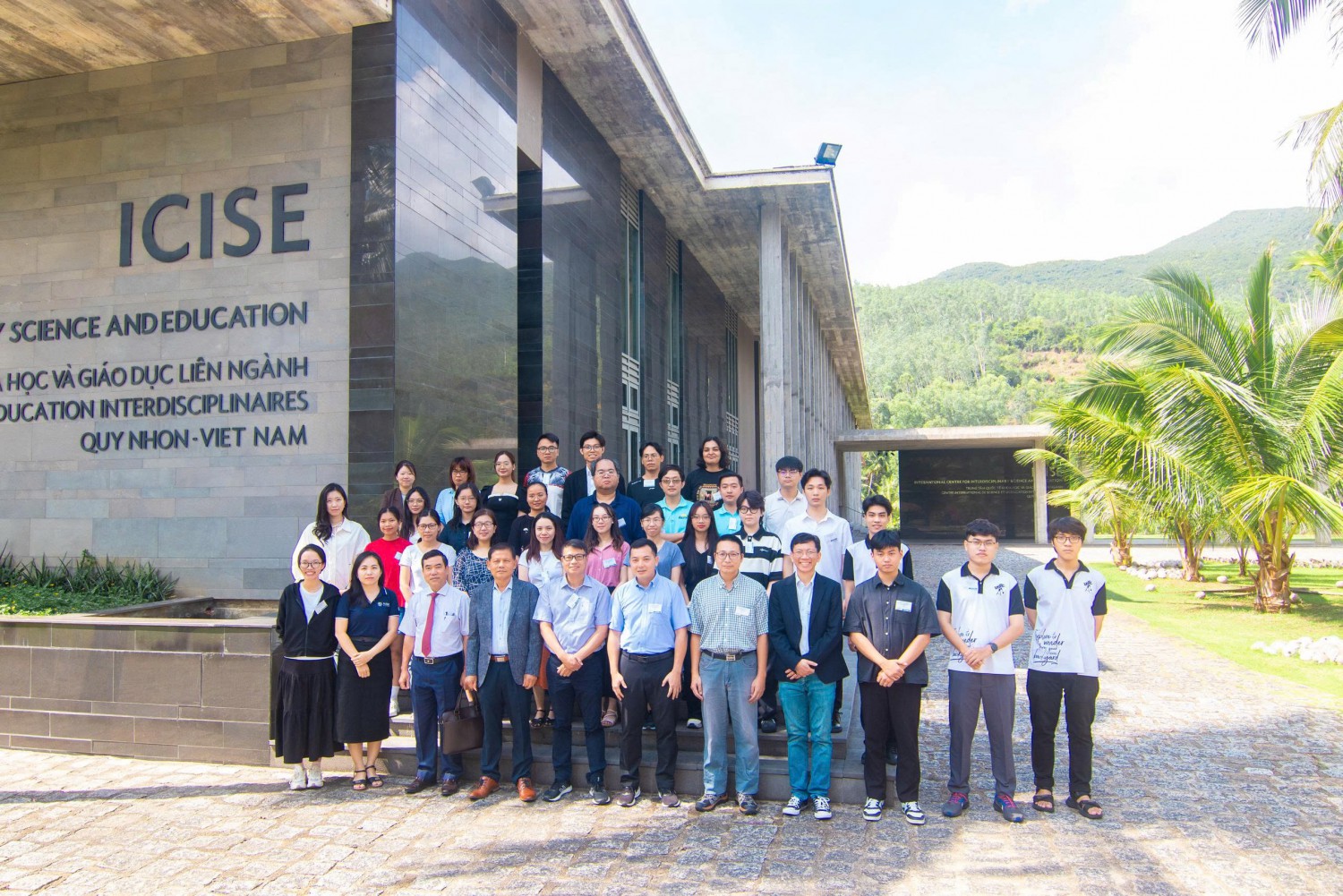
Quy Nhon, Binh Dinh – May 25th to 30th, 2025 – Nearly 40 scientists, experts, and postgraduate researchers in the field of astrophysics are attending the SAGI 2025 International Astrophysics Workshop, held at the International Center for Interdisciplinary Science and Education (ICISE). The workshop aims to facilitate the exchange of new research findings, promote scientific collaboration, and update participants on advanced technologies in astronomical observation and modeling.
Focus on dust polarization and modern astrophysical topics
The central theme of this year’s workshop is cosmic dust polarization—a crucial tool for studying magnetic fields in the universe, star-forming regions, and the evolution of planetary systems. In addition, other topics such as supermassive black holes, transient astronomical phenomena, 3D magnetic field mapping, and spectroscopy are also included in the discussions.
The event reflects progress in utilizing data from advanced telescopes such as ALMA, NOEMA, JCMT/Pol2, as well as the James Webb Space Telescope (JWST). The integration of observational data, theoretical modeling, and computational simulations is expected to shed light on several outstanding questions in astrophysics.
International speakers and specialized academic exchange
SAGI 2025 features the participation of many experts from prestigious research institutions around the world, such as Stanford University (USA), Leiden University and Radboud University (Netherlands), the Academia Sinica Institute of Astronomy and Astrophysics – ASIAA (Taiwan – China), Zhejiang University (China), as well as Vietnamese scientists from the Vietnam National Space Center (VNSC) and the Institute for Interdisciplinary Research in Science and Education (IFIRSE).
Notable speakers include Prof. Dr. Marijke Haverkorn (Radboud University, Netherlands), Dr. Mehrnoosh Tahani (Stanford University, USA), Dr. Hsi-Wei Yen (ASIAA, Taiwan – China), Assoc. Prof. Dr. Pham Ngoc Diep (Vietnam National Space Center, Vietnam), along with many experts from South Korea, China, the United States, and Vietnam. The workshop also encourages the participation of young researchers, providing opportunities to present their work, engage in academic dialogue, and build international networks in the field of astrophysics.
Linking scientific activity with local cultural experience
In addition to academic sessions, SAGI 2025 incorporates local field trips, offering participants meaningful cultural and scientific experiences in Binh Dinh. During the program, scientists will visit prominent local landmarks such as the Science Discovery Center, Twin Cham Towers, Ky Co – Eo Gio beach area, Quang Trung Museum, and Lang Song Church. These are not only sites of historical, cultural, and scientific value, but also serve as bridges fostering mutual understanding and strengthening the link between academic knowledge and local identity.
Promoting academic connectivity in Vietnam
The organization of SAGI 2025 in Quy Nhon once again affirms Vietnam’s increasingly prominent role in the international academic network, particularly in the field of astrophysics. The event creates an important opportunity for domestic scientists to directly engage with cutting-edge research trends and modern observational technologies, while also laying a solid foundation to enhance academic connectivity, expand international cooperation, and actively contribute to global scientific forums. It also demonstrates the strong commitment of Vietnam’s scientific community to integration and innovation in the context of global transformation.
Author: Nguyễn Hoàng
Newer articles
Older articles


Album


Statistics
- Online18
- Today12,549
- This month212,630
- Total7,304,864